What is a moat?

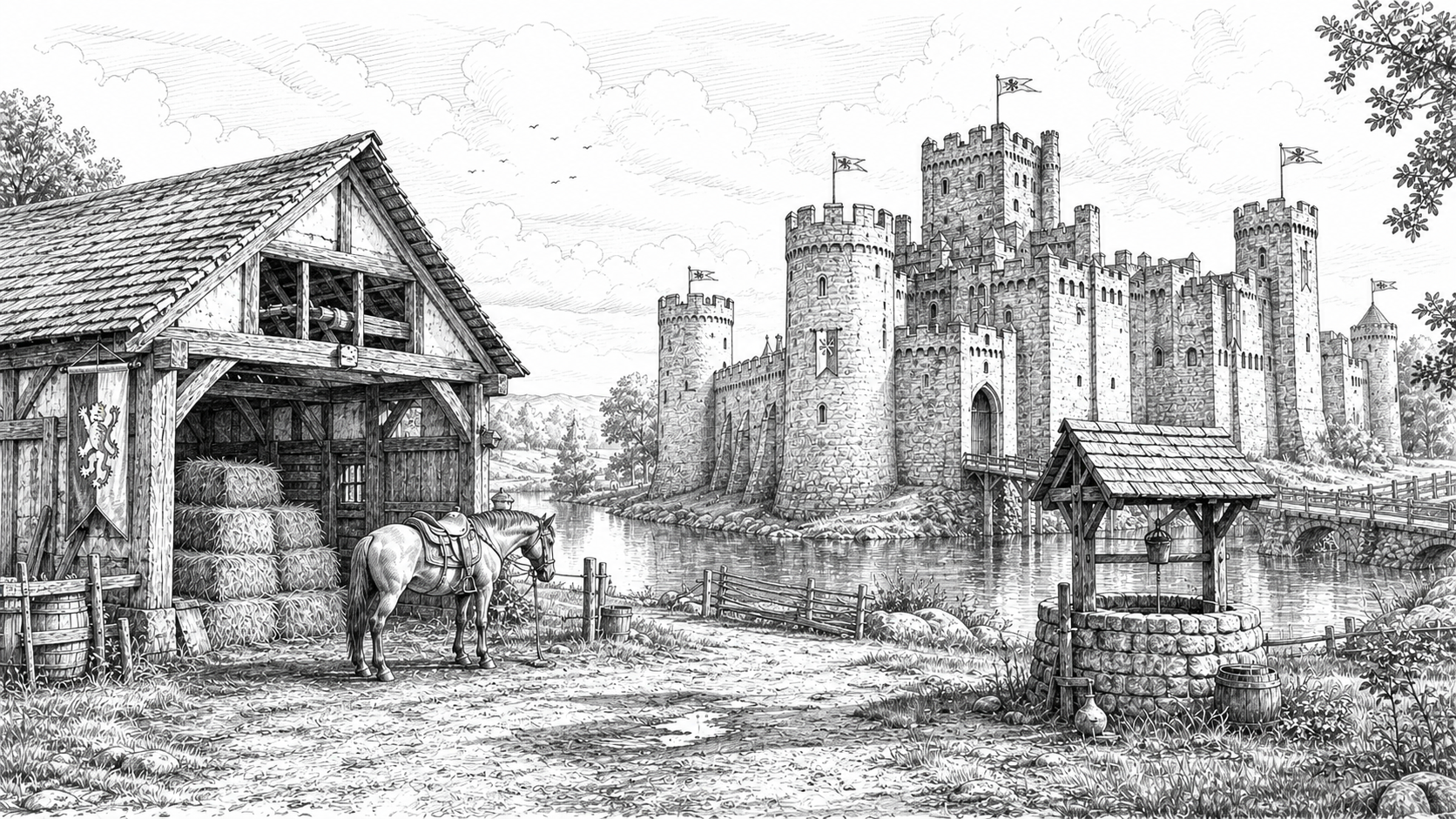
When people talk about business moats, the image that usually comes to mind is a castle surrounded by water. Warren Buffett has spent years popularizing that idea, and now the phrase shows up everywhere in investing conversations. Most of the time, the same examples get repeated: Apple, Google, and a few other giants that seem to have defenses so strong that nobody can touch them. It has almost become a habit to look for the next great castle, the next business with a moat just as wide and deep.
But moats do not all look the same. In fact, that is the part many investors miss. A moat can take many forms, and not every durable business looks like a fortress. Think of a tiger and a porcupine. The tiger’s advantages are obvious: strength, speed, aggression, and power. The porcupine has nothing like that. It survives through a very different kind of defense. Its spikes make it costly for the tiger to attack, and over time even a young predator learns that some fights are simply not worth having. Nature is full of examples like this. Not every creature tries to become the biggest or most fearsome one in the forest. Some survive by being inconvenient to attack, difficult to replace, or simply too much trouble to deal with.
That idea matters in investing more than people realize. Charlie Munger often spoke about biology because he understood that nature has a lot to teach us about economics, competition, and adaptation. Businesses, like living organisms, do not all need to dominate through size or glamour. Some succeed because they are resilient in quieter, less obvious ways.
The horse barn outside the walls
For this purpose, imagine a horse barn sitting outside the castle walls. It may not look impressive. It may not have the dramatic appeal of a fortress, and nobody writes songs about it. But it has food, shelter, and water, and it serves an essential function. An invading army is not going to waste time destroying it unless it absolutely has to. The barn may not appear to have a moat, but it still has protection of a different kind. That is often how real businesses work. They may not be flashy, but they are useful, dependable, and hard to dislodge.
In investing, everyone tends to chase the castle. The grand, obvious businesses get the attention, the headlines, and the admiration. But there are also companies that are more like that horse barn: unglamorous, overlooked, and not especially exciting, yet capable of producing solid returns for years. Because they are not glamorous, they often face less competition. Fewer people are rushing to build the same thing. In some industries, the cost of entry is so high and the returns are so low that once a business is established, it can sit in a pretty durable position for a long time.
Think of regulated utilities, some local infrastructure businesses, or even a regional trucking company that has built customer relationships, routes, and operating knowledge over many years. Berkshire owns businesses like that for a reason. They may not be spectacular, but they can be remarkably durable. Their strength lies not in drama, but in persistence.
Markets change constantly. New technologies appear, customer preferences shift, and entire industries evolve faster than anyone expects. If you want to outperform over time, it helps to look at businesses from different angles and ask a more basic question: why does this business survive? Not just why is it admired, or why is it growing, but why does it keep earning and keep standing when others fall away?
Sometimes the best businesses are castles. Sometimes they are porcupines. And sometimes they are horse barns quietly doing their job while everyone else is staring at the fortress.